


Introduction
In many machines, linear movement begins with a rotating shaft, and a trapezoidal lead screw is one of the most practical ways to make that conversion. Its threaded profile is designed to carry axial loads with stability, making it common in jacks, presses, machine tools, and positioning systems. This article explains what defines a trapezoidal lead screw, how its thread geometry, pitch, lead, and starts affect motion, and why its sliding-contact design remains useful despite newer alternatives. By the end, readers will understand how it works, where it fits best, and the tradeoffs involved in using it.
What Is a Trapezoidal Lead Screw
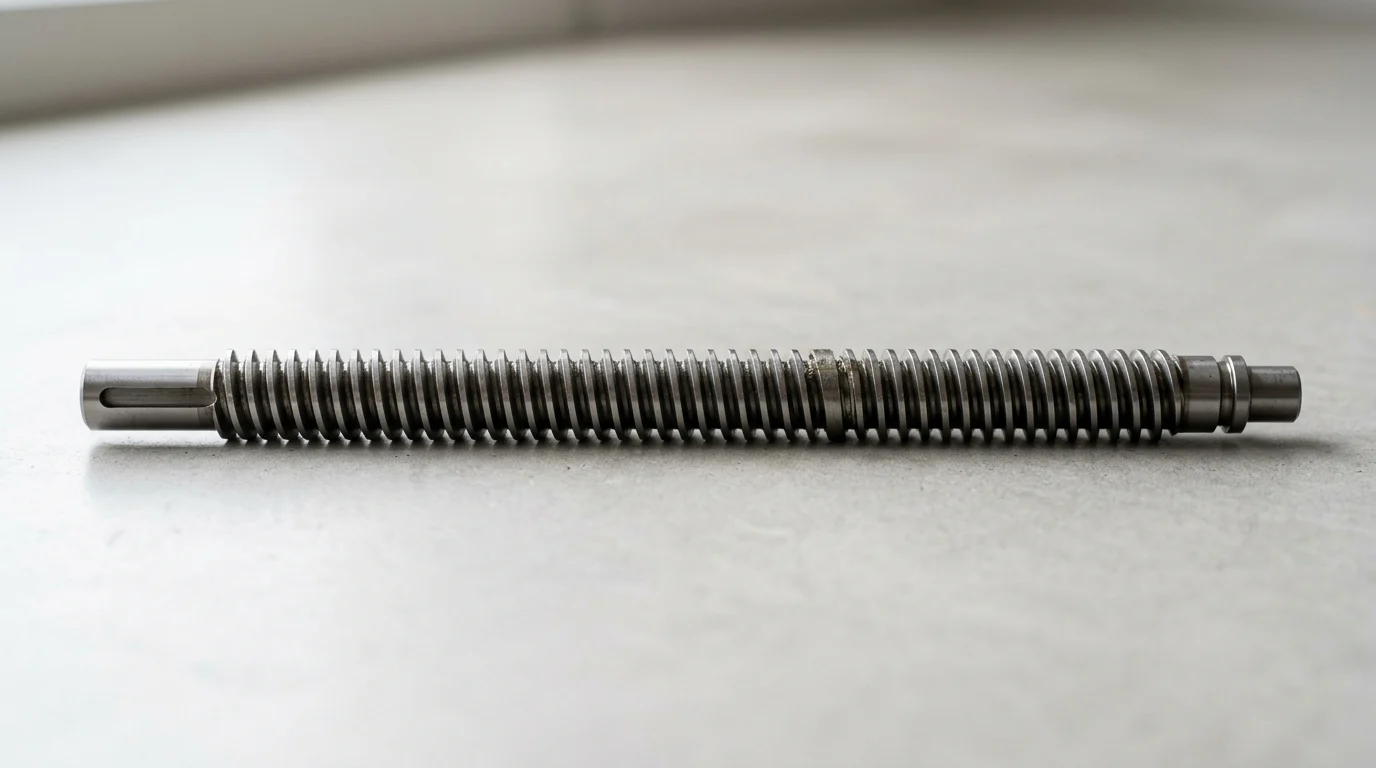
Mechanical engineering relies heavily on converting rotary motion into linear motion, and few components accomplish this as reliably as the trapezoidal lead screw. Defined by its distinct thread geometry, this actuator is a foundational element in modern machinery.
Standardized under the DIN 103 specification, it provides high axial force transmission through a relatively simple sliding-friction mechanism. While newer technologies like linear motors exist, the robust nature of this classic actuator ensures its continued dominance in heavy-duty and fail-safe applications.
Thread profile, lead, pitch, and starts
The defining characteristic of this component is its 30-degree thread angle, which differentiates it from other power transmission threads. To understand its geometry, engineers must differentiate between lead, pitch, and the number of starts. Pitch refers to the linear distance between two adjacent thread crests, typically ranging from 2 mm to 12 mm for standard industrial sizes.
Lead, however, is the actual linear distance the nut travels along the shaft in a single 360-degree revolution. In a single-start screw, the pitch and lead are identical. In a multi-start screw—which features multiple independent thread grooves wrapping around the shaft—the lead is calculated by multiplying the pitch by the number of starts. A two-start screw with a 4 mm pitch, for example, will yield an 8 mm lead, doubling the linear travel speed for every rotation without compromising the core shaft diameter.
Main components and working principle
The system relies on two primary components: the threaded shaft and the mating nut. The shaft is typically manufactured from medium carbon steel (such as C45) or stainless steel grades (like 304 or 316) to ensure high tensile strength and resistance to torsional shear.
The nut is traditionally machined from softer, bearing-grade materials to localize wear and reduce friction. Bronze and brass are standard choices for high-load applications, while advanced engineered polymers, such as polyacetal (POM) or self-lubricating PTFE blends, are utilized for lower loads where quiet operation or dry running is required. As the shaft rotates, the inclined planes of the trapezoidal threads push against the internal threads of the nut, forcing it to move linearly. Because there are no rolling elements, the contact area is exceptionally large, allowing the system to withstand significant shock loads.
How rotary motion becomes linear thrust
Transforming rotational torque into linear thrust involves overcoming the inherent friction of the sliding thread interface. The efficiency of this transformation is largely dictated by the lead angle of the thread and the coefficient of friction between the selected materials.
Because of the sliding contact, a trapezoidal lead screw generally operates at an efficiency rating between 20% and 40%. While this is considerably lower than the 90% efficiency typical of ball screws, it provides a distinct mechanical advantage in specific scenarios. The input torque required to generate a specific linear thrust can be mathematically modeled, factoring in the mean diameter of the thread and the friction angle.
| Specification Designation | Pitch (mm) | Lead (mm) | Minor Diameter (mm) | Typical Efficiency (%) |
|---|---|---|---|---|
| Tr 10 x 2 | 2 | 2 | 7.5 | ~ 28% |
| Tr 16 x 4 | 4 | 4 | 11.5 | ~ 35% |
| Tr 24 x 5 | 5 | 5 | 18.5 | ~ 38% |
| Tr 36 x 6 | 6 | 6 | 29.0 | ~ 32% |
Why Trapezoidal Lead Screws Still Matter
Despite the widespread availability of high-efficiency ball screws and advanced linear motors, the trapezoidal profile remains a staple in mechanical design.
Its continued relevance is not merely a matter of legacy engineering; rather, it is driven by a unique combination of physical traits that make it the optimal choice for specific operational profiles where simplicity and safety are paramount.
Cost, load capacity, and self-locking advantages
The most significant advantage of this thread profile is its inherent self-locking capability. Self-locking occurs when the lead angle of the thread is smaller than the angle of friction between the nut and the screw materials. In practical terms, if the lead angle is below 5 degrees and the system's overall efficiency is under 50%, the screw will not back-drive under the weight of the load when the rotational power is removed.
This dynamic eliminates the need for expensive external braking mechanisms in vertical lifting applications. Furthermore, the massive surface contact area between the sliding threads yields exceptional static load capacities. A standard 36 mm diameter trapezoidal screw can routinely support static axial loads exceeding 50 kN without plastic deformation. From a procurement standpoint, the absence of complex rolling elements and recirculating channels means that manufacturing costs for these systems are routinely 30% to 50% lower than comparable precision-ground ball screws, making them highly attractive for budget-conscious heavy-duty designs.
Common applications and best-fit use cases
These specific mechanical traits dictate their best-fit use cases across the industrial landscape. They are the undisputed standard for heavy lifting jacks, scissor lifts, and press machines where holding a load securely without power is a critical safety requirement.
In the realm of CNC machining and automated routing, they are frequently deployed on the Z-axis to prevent the spindle from crashing into the workpiece when the machine is powered down. Additionally, they excel in harsh, highly contaminated environments. Because the nut closely hugs the shaft, it acts as a natural scraper, clearing away debris, sawdust, or metal shavings that would otherwise catastrophically jam a recirculating ball nut. Valve actuation in the oil and gas sector also relies heavily on these screws, as the high static load capacity and self-locking nature ensure that high-pressure gate valves remain firmly closed or open without continuous energy expenditure.
How Trapezoidal Lead Screws Compare with Acme Screws
A common point of confusion in mechanical specification is the distinction between trapezoidal threads and Acme threads.
While they serve identical mechanical functions and look remarkably similar to the naked eye, they are governed by different international standards and possess slight geometric variances that make them strictly non-interchangeable in an assembly.
Key performance and specification criteria
The primary technical divergence lies in the thread angle and the measurement system. A trapezoidal lead screw utilizes a 30-degree thread angle and is dimensioned entirely in metric units, governed by the DIN 103 standard and corresponding ISO standards like ISO 2901.
Conversely, the Acme thread features a slightly narrower 29-degree thread angle and is dimensioned in imperial units (inches), governed by the ASME B1.5 standard. This one-degree difference in flank angle slightly alters the radial load distribution and the bursting forces exerted on the nut, though the practical difference in load capacity is negligible for most applications.
| Feature | Trapezoidal Thread | Acme Thread |
|---|---|---|
| Standard | DIN 103 / ISO 2901 | ASME B1.5 |
| Thread Angle | 30 Degrees | 29 Degrees |
| Measurement System | Metric (mm) | Imperial (inches) |
| Primary Market | Europe, Asia, Global | North America |
When a trapezoidal lead screw is the better choice
Choosing the metric 30-degree profile is almost always the superior choice when designing equipment intended for the global market. Because the vast majority of international manufacturing relies on the metric system, sourcing DIN 103-compliant shafts and nuts is significantly easier, faster, and more cost-effective outside of North America.
Furthermore, integrating the actuator into modern machinery—which typically utilizes metric bearings, metric stepper motors, and metric couplings—is seamless. Specifying an Acme thread in a predominantly metric assembly forces engineers to source specialized hybrid couplings or custom-machined bearing journals, needlessly complicating the bill of materials and introducing supply chain vulnerabilities.
Limitations engineers should consider
Despite their reliability, engineers must strictly account for the friction-induced limitations of sliding threads. The most critical constraint is the PV (Pressure-Velocity) limit, which dictates the maximum allowable combination of load and sliding speed before the nut material begins to melt or rapidly degrade.
For a standard bronze nut running on a steel shaft, the maximum PV value is typically around 300 N/mm² * m/min. Consequently, these screws are fundamentally unsuited for high-speed, continuous-duty applications. Maximum surface sliding speeds must generally be kept below 1.5 to 3.0 meters per second, depending heavily on the quality of lubrication. Exceeding these limits results in rapid thermal expansion, severe galling, and ultimately, catastrophic mechanical seizure.
How to Select a Trapezoidal Lead Screw
Proper sizing and selection of a linear actuator require a rigorous engineering approach.
Guesswork or simply replacing a component with the next size up can lead to premature failure, excessive power draw, or dangerous mechanical resonance during operation.
Core sizing and design checks
The core sizing process begins by evaluating the maximum axial load under compression, which introduces the risk of column buckling. Engineers must apply Euler's column formula, factoring in the screw's root diameter, the unsupported length, and the end-fixity conditions (such as fixed-free or supported-supported).
A safety factor of at least 2.0 to 3.0 is mandatory when calculating the critical buckling load. Simultaneously, the critical speed must be assessed. All rotating shafts possess a natural resonant frequency; if the operational rotational speed approaches this frequency, the shaft will vibrate violently, destroying the support bearings. As a strict design rule, the maximum operating speed should never exceed 80% of the calculated critical speed.
Material, lubrication, and manufacturing quality
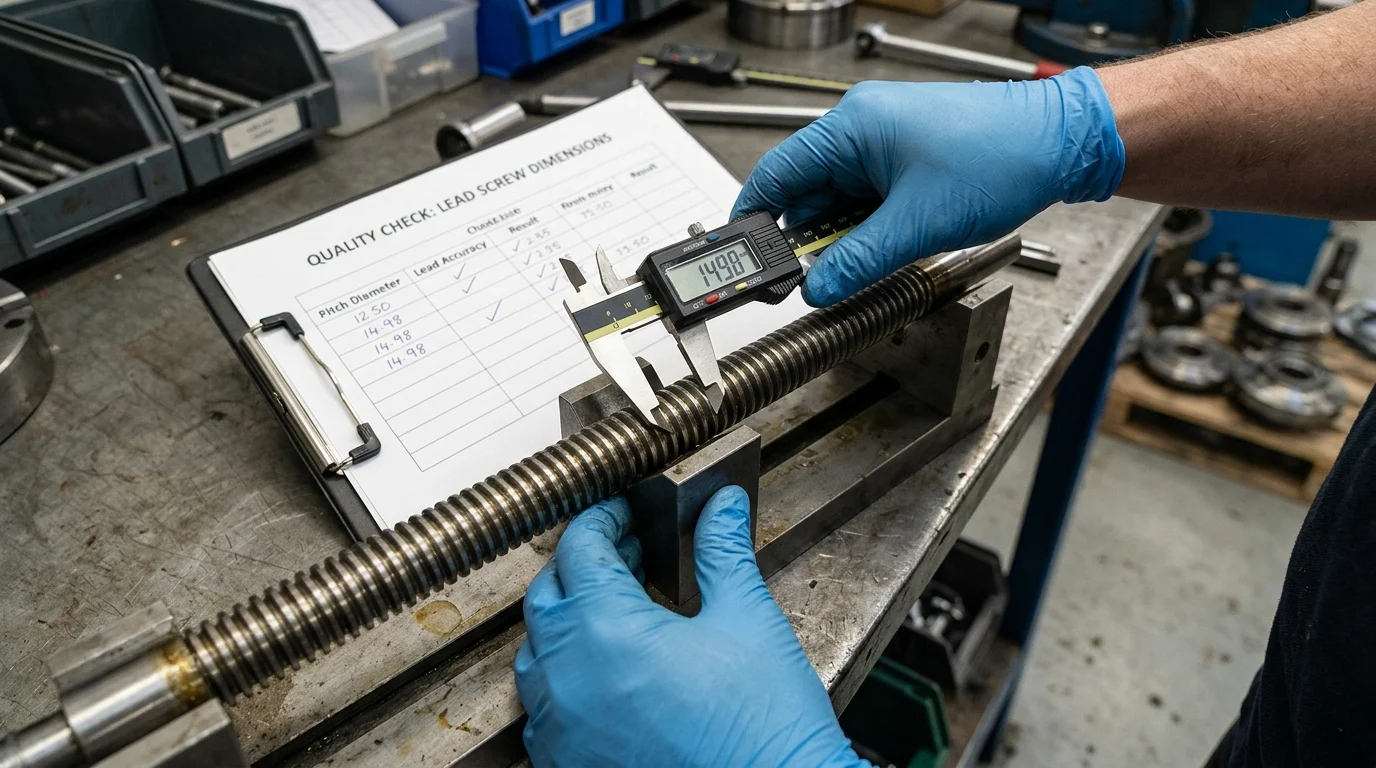
The manufacturing method of the thread significantly impacts its performance and longevity. Rolled threads are created by cold-forming the steel, which compresses the grain structure and yields a highly polished surface finish, typically between Ra 1.6 and 3.2 µm. This smooth finish dramatically reduces friction and extends the life of the mating nut.
Cut or machined threads, while allowing for custom pitches, generally have a rougher finish and lower fatigue strength. Material selection for the nut is equally critical. A bronze nut offers the highest load capacity but requires continuous lubrication with a high-quality, lithium-based grease. Conversely, engineered polymer nuts are ideal for low-load applications up to roughly 10 kN, offering the distinct advantages of zero-maintenance dry running and significantly reduced acoustic noise.
Practical selection steps for buyers and engineers
Buyers and engineers should follow a systematic, step-by-step procurement process. Step one involves defining the maximum dynamic and static loads, adding an appropriate shock factor if the application involves impact. Step two requires establishing the desired linear travel speed, which, when combined with the motor's RPM limits, will dictate the necessary thread lead.
Step three is verifying the PV value against the manufacturer's charts for the chosen nut material. Finally, buyers must specify the exact end-machining required to interface with the support bearings and drive motors. Utilizing a reputable lead screw manufacturer ensures that the thread tolerances conform precisely to the DIN 103 standard, preventing the accelerated wear caused by mismatched pitch diameters.
How to Decide if a Trapezoidal Lead Screw Is Right
The final engineering decision involves weighing the operational demands of the specific application against the inherent characteristics of sliding friction technology.
Making the right choice requires a holistic view of the machine's lifecycle, maintenance capabilities, and budget constraints.
Application and procurement questions to ask
The most crucial application question is the expected duty cycle. Duty cycle is the ratio of operating time to resting time within a given period. Because sliding threads generate significant frictional heat, they are generally restricted to low or medium duty cycles—strictly defined as operating less than 30% to 50% of the time.
If the mechanism requires continuous, 24/7 linear positioning, the heat generation will destroy a polymer nut and severely gall a bronze nut, making a recirculating ball screw the mandatory choice. Procurement teams must also ask about positional accuracy requirements. While precision-rolled trapezoidal threads can achieve lead accuracies of 0.1 mm to 0.3 mm per 300 mm of travel, they inherently suffer from axial backlash due to the clearance required between the sliding threads. If zero-backlash, micrometer-level positioning is required, anti-backlash nuts must be implemented, which increase friction and reduce overall efficiency.
Balancing performance, maintenance, and supply risk
Successfully integrating this technology requires balancing upfront savings against long-term maintenance realities. The supply risk for metric trapezoidal threads is remarkably low; they are heavily standardized commodities with global availability.
Standard lead times for stock rolled lengths and standard nuts are typically 1 to 2 weeks, compared to the 6 to 8 weeks often required for precision-ground ball screw assemblies. However, the maintenance burden is higher. Unless using self-lubricating polymers, maintenance teams must adhere to strict greasing schedules to prevent catastrophic wear. Depending on the load and operating environment, polymer nuts may require wholesale replacement every 10,000 to 20,000 cycles. By acknowledging these trade-offs, engineers can leverage the massive load capacity, self-locking safety, and cost-efficiency of the trapezoidal profile to build robust, reliable linear motion systems.
Further reading:
Key Takeaways
- The most important conclusions and rationale for Trapezoidal Lead Screw
- Specs, compliance, and risk checks worth validating before you commit
- Practical next steps and caveats readers can apply immediately
Frequently Asked Questions
What is a trapezoidal lead screw?
It is a power screw with a 30° trapezoidal thread profile that converts rotary motion into linear motion for lifting, positioning, and heavy-load drive systems.
How does a trapezoidal lead screw work?
When the threaded shaft rotates, the mating nut travels linearly along the threads. This sliding contact turns motor torque into axial thrust.
What is the difference between lead and pitch?
Pitch is the distance between adjacent thread crests. Lead is the nut’s travel in one full turn; on multi-start screws, lead equals pitch multiplied by the number of starts.
Why choose a trapezoidal lead screw instead of a ball screw?
Choose it for lower cost, high load capacity, shock resistance, and self-locking behavior. It is ideal when safety and simple maintenance matter more than high efficiency.
Can CSHUNGAN supply trapezoidal lead screw parts and matching nuts?
Yes. CSHUNGAN offers lead screw-related components and nuts; check the site for available materials, dimensions, and application-specific support.